CRS and Your E-Wallet: Tax Reporting in 2026 - What Gets Reported and Why

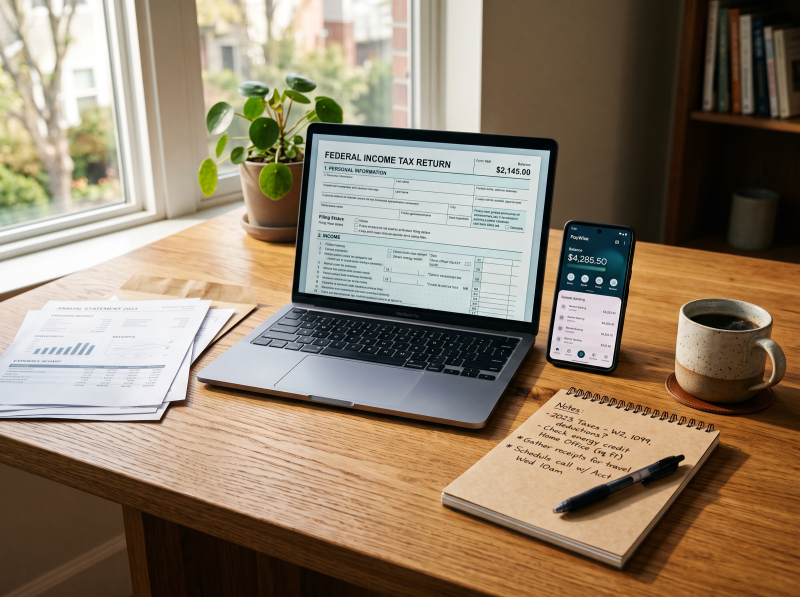
Starting 1 January 2026, e-wallets like Skrill, Neteller, and Luxon Pay fall under the same global tax-reporting rules that banks have followed for a decade - here is what that means for your money, your data, and what you need to do about it.
Last updated: July 2026
The OECD developed the Common Reporting Standard in 2014 to automate the exchange of financial account data between tax authorities - by 2024, over 171 million accounts worth nearly EUR 13 trillion were exchanged across 116 jurisdictions, according to the OECD’s Global Forum on Transparency and Exchange of Information. Banks have been reporting since 2016. What changed in 2026 is that e-wallets joined the system.
The OECD introduced CRS 2.0, expanding “Depository Account” to include Specified Electronic Money Products (SEMPs). Any institution holding SEMPs for customers is now a Depository Institution under CRS. HMRC aligned UK law through IEIM400741, confirming that from 1 January 2026, entities holding SEMPs are Depository Institutions.
Before 2026, issuing e-money was explicitly not deposit-taking under HMRC rules - pre-2026 guidance in IEIM400750 treated EMIs as outside CRS. That distinction is gone.
In plain English: before 2026, tax authorities could not automatically see your e-wallet balances. From 2026, they can - on the same terms as your bank accounts.
The PSD3 and PSR reforms are reshaping e-money regulation across Europe - CRS 2.0 is the tax-transparency piece of the same shift.
For your e-wallet to fall under CRS, it must hold a Specified Electronic Money Product: a digital representation of a single fiat currency, issued when you deposit funds, representing a claim on the issuer in that same currency, accepted by third parties, and redeemable at par value. Most e-wallet balances meet all five conditions, and each currency balance is treated as a separate SEMP.
One carve-out: products created solely for fund transfers where money is not held longer than 60 days are excluded. Keep a running balance, and your account falls within scope.
If your account is reportable, CRS 2.0 requires your provider to share your name, address, date of birth, TIN for every tax residence, 31 December balance, income credited, whether the account is new or pre-existing, whether a valid self-certification was obtained, joint account details, and account type classification.
CRS 2.0 eliminated the “tie-breaker” rule for dual residents. If you are tax resident in two countries, your data goes to both automatically.
Not every account is reportable. CRS includes a de minimis exclusion, detailed in HMRC guidance IEIM401875.
Your provider calculates a rolling 90-day average of your end-of-day balance. If that average stays at or below roughly EUR 9,300 (USD 10,000) every single day of the calendar year, your account may qualify as an Excluded Account and may not be reported. If the average exceeds the threshold on any day, the account becomes reportable for the entire year - cross the line once, and the full year is in scope.
Monitoring began on 1 January 2026. Providers reassess annually, so an account excluded one year can become reportable the next.
Example: your e-wallet holds an average of roughly EUR 7,000 across 90 days - below the line, not reported. You receive a large payment and the average climbs to roughly EUR 11,000 on day 45. The account becomes reportable for the rest of the year, even if your balance drops the next week.
The threshold applies per SEMP, not per account - each currency balance is assessed separately. Two balances each below the line stay below it, even if the combined total exceeds roughly EUR 9,300. A single currency balance that crosses the threshold is reportable.
E-money institutions began collecting self-certifications and monitoring balances from 1 January 2026. UK providers submit 2026 data to HMRC by 31 May 2027, with international exchanges across over 120 jurisdictions later that year. Your data goes to every jurisdiction where you are tax resident.
If you have not provided a valid TIN, the provider must document its efforts to obtain one - and may restrict or close your account.
Skrill Limited is FCA-authorised under the Electronic Money Regulations 2011 (FRN 900001), part of Paysafe (NYSE: PSFE). For EEA customers, Paysafe Payment Solutions Limited, regulated by the Central Bank of Ireland, provides the service.
Skrill accounts holding stored-value balances are SEMP-holding accounts under CRS 2.0. Skrill collects tax-residency information during KYC - what changed is that this data now feeds into the automatic exchange pipeline. If your balance exceeds roughly EUR 9,300, Skrill reports to HMRC or the Central Bank of Ireland.
Skrill holds a MiCA CASP license - crypto falls under CARF, not CRS - but the fiat side remains CRS-reportable. Read our MiCAR explainer for more.
Open your Skrill account through Wikiwallet and you become a Silver VIP with a reduced EUR 5,000 threshold - the standard path requires EUR 15,000. Your account is upgraded within 24 hours, and you claim a roughly EUR 32 welcome bonus.
Neteller (Paysafe Financial Services Limited, FCA FRN 900015) shares the same parent as Skrill. For CRS purposes, Neteller accounts are functionally identical: SEMP-holding e-money products with the same reporting obligations. VIP tiers do not affect CRS classification.
Open your Neteller account through Wikiwallet and you start as a Silver VIP with a reduced threshold of roughly EUR 5,500 - the standard path requires roughly EUR 13,800. You claim a roughly EUR 32 welcome bonus, and activation takes up to 24 hours for new accounts (48 hours for existing accounts inactive for 3 months or more).
Luxon Payments Ltd (FCA FRN 900929) is a smaller UK EMI offering multi-currency accounts and a prepaid Mastercard. It falls squarely within the CRS 2.0 classification - its tier structure does not exempt any tier. Unlike Skrill and Neteller, Luxon Pay does not hold a MiCA CASP license, but CRS covers its fiat e-money balances regardless.
Open your Luxon Pay account through Wikiwallet and you unlock Noir VIP with a reduced EUR 500 threshold - the standard path requires EUR 30,000. Your account is upgraded within 24 hours, and you claim a roughly EUR 28 welcome bonus.
Pro Tip: CRS reporting does not change how your e-wallet works day to day. It is a back-end obligation for the provider, not a restriction on your account. What matters is making sure your TIN and tax-residency details are accurate - because from 2027, the data your provider already holds will be shared with tax authorities automatically.
Yes. From 1 January 2026, e-money institutions holding SEMPs are classified as Depository Institutions under CRS 2.0. If your e-wallet stores a balance, it is likely in scope.
Your name, address, date of birth, TIN for each tax residence, year-end balance, income credited, joint account status, number of holders, and whether a valid self-certification was obtained.
CRS 2.0, effective from 2026, expands reporting to e-money and CBDCs, tightens self-certification rules, and requires reporting all tax residencies - the old “tie-breaker” rule for dual residents is gone.
Yes. If your rolling 90-day average stays at or below roughly EUR 9,300 throughout the year, your account may qualify as an Excluded Account. Exceed that threshold on any day, and it becomes reportable for the full year.
No. CRS is a transparency framework - it does not change tax rates or create new taxes. If your tax filings reflect your true income and assets, CRS changes nothing for you.
Bottom line: CRS 2.0 closes the gap between e-wallets and bank accounts for tax-reporting purposes. If you use Skrill, Neteller, or Luxon Pay across borders, your account data is now visible to tax authorities in every country where you are tax resident. For most people, this changes nothing - as long as your declarations match your actual position, CRS is paperwork for your provider, not a problem for you. If you have been treating an e-wallet as invisible to the tax system, 2026 is the year that changes.
Whether you trade forex, manage multi-currency funds, or make frequent international payments, knowing where you stand with CRS helps you stay ahead of the rules - and using your e-wallet through Wikiwallet helps you keep more of your money.
This article is for informational purposes only and does not constitute tax advice. Consult a qualified tax professional for your specific situation.
You find a forex broker with a solid welcome bonus. You sign up, verify your account, and fund it with Skrill - only to discover the bonus is gone. The fine print excluded e-wallet deposits. This is not a rare edge case. Here are six brokers where the welcome bonus survives a Skrill or Neteller ...
Every deposit, withdrawal, card swipe, and crypto trade you make on Skrill could be earning you cashback. But most Skrill account holders never activate the program that pays it. Skrill Knect is a free loyalty programme that turns transactions you are already making into redeemable points - and it ...
You closed a profitable trade. Now you are waiting for your money. Bank wires crawl through correspondent banks for 3 to 5 business days. Debit card withdrawals are not much faster. Every hour your capital sits in limbo is an hour it is not working for you. This is the gap e-wallets close. A Skr...
Most broker lists skip the deposit fee. We checked 12 forex brokers. Here is who charges zero for Skrill and Neteller funding, and who quietly takes a cut - unbiased, per-broker breakdown. Most “Skrill forex brokers” lists tell you whether a broker accepts the wallet. Sites like ForexDominion list...

Donate your question and we’ll provide an answer. Together we can make this community smarter!


